Mental Health Self-Referral Platform
Case StudyMental health services in New Zealand are currently experiencing record demand. Public wait-lists for ADHD and related assessments exceed 12 months in major centres, while private options remain fragmented and opaque.
Patients face multiple barriers in accessing care:
- No single place to see which providers are accepting new referrals.
- No public-facing directory of specialists – GPs have access to one, but patients do not.
- User-generated lists exist but are scattered and unofficial.
- Filling out the same intake forms multiple times.
- Lack of status updates, creating anxiety and drop-off.
"I sent three referral emails and never heard back. I can't tell if I'm in a queue or just ignored." – Primary research participant, age 32
Figma User Research Journey Mapping User Flows Prototyping Wireframes UI Desktop Mobile
User Research
Methodology: semi-structured interviews with patients seeking ADHD or related mental health assessments, plus desk research on Ministry of Health service data.
Personas created:
- "Ella" – ADHD adult seeking first assessment
- "Injae" – parent supporting teen through referral
- "Spencer" – patient with prior misdiagnosis navigating next steps
Research Insights
| Barrier | Evidence | Opportunity |
|---|---|---|
| Wait-lists | Users were often left in the dark after submitting a referral. | Build a real-time capacity indicator with patient-facing updates. |
| Duplicate forms | Wasted time spent re-entering history per provider. | One master intake form that follows the patient. |
| No directory | Users rely on GPs or shared spreadsheets to find providers. | Leverage and centralise crowdsourced directories into a patient-friendly platform. Use existing GP-access directories where possible. |
Ideation & Brainstorming
- Unified patient-centred intake – single smart form usable across providers.
- Progress tracker – show referral status and next steps in one dashboard.
- AI support agent – helps gather background info from notes/emails.
- Post-diagnosis toolkit – reminders, subsidy options, coping resources.
Prioritisation (MoSCoW + Feasibility):
| Idea | Value | Effort | Decision |
|---|---|---|---|
| Unified intake | High | Med | ✅ MVP |
| Progress tracker | High | Med | ✅ MVP |
| AI agent | High | High | Explore R&D |
| Toolkit | Med | Med | Future phase |
Solution
A self-service referral platform that:
- Lets users complete one smart intake in under 8 minutes.
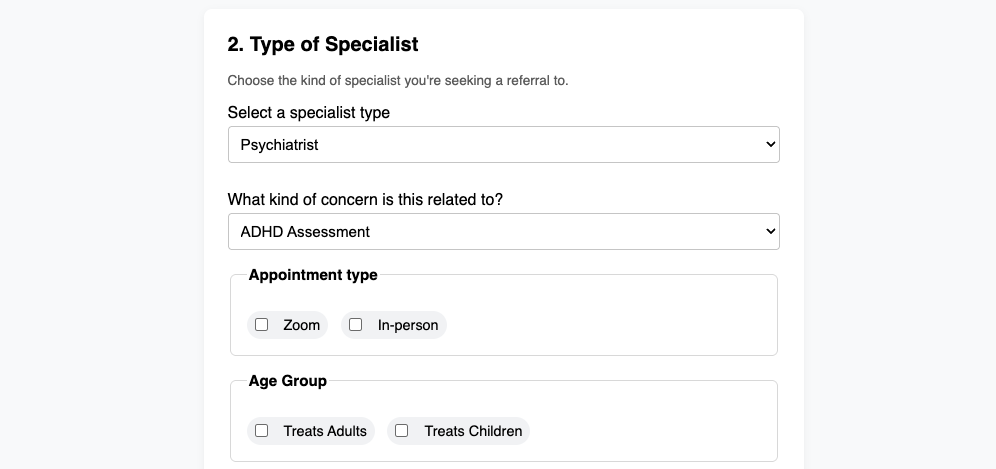
- Shows only clinics accepting referrals based on filters (e.g. telehealth, age group, medication).
- Auto-sends referral + documents.
- Sends SMS/email updates, reducing patient uncertainty and drop-off.
Leverages existing systems:
- Integrates with the same provider directories already used by GPs – no new API build required.
- Can import and consolidate information from existing user-generated lists.
Outcome (usability pilot – 3 weeks)
- 9/10 testers preferred the platform over emailing clinics manually.
- All participants said they would recommend it to a friend.
- Participants cited reduced stress and improved clarity on "what happens next."
Reflection & Next Steps
- What worked: clear intake UX, centralised platform.
- Improvements: offer pathway for GP co-referral.
- Roadmap: explore provider-side portal; integrate with existing health records or pharmacy systems; live progress tracker; optional pre-screening questionnaire.